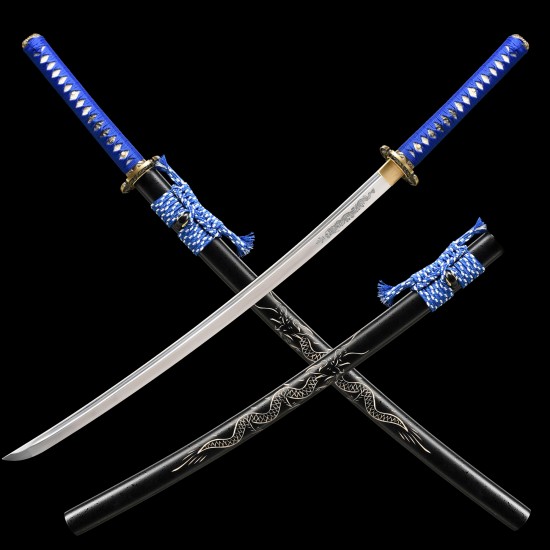
The Different Types of Swords: From Katana to Claymore and Beyond
Swords have been used for centuries across the world, evolving in design, purpose, and symbolism. From the elegant katana of Japan to the massive claymore of Scotland, every sword tells a story rooted in its culture and history. In this guide, we'll explore the most iconic types of swords, their features, and what makes each one unique.
1. Katana
Origin: Japan
Blade Length: ~24-30 inches
Features:
Single-edged, curved blade
Razor-sharp edge with a long handle for two-handed use
Traditionally crafted through folding high-carbon steel
Purpose: Known as the samurai sword, the katana was designed for quick, precise strikes. It's revered for its beauty, craftsmanship, and role in the code of Bushido.
2. Claymore
Origin: Scotland (Medieval Era)
Blade Length: ~55 inches or more
Features:
Massive two-handed, double-edged blade
Large crossguard, sometimes with down-angled quillons
Balanced for wide, sweeping strikes
Purpose: The claymore was wielded by Scottish Highland warriors during the late Middle Ages, often in battles against armored opponents. Its sheer size and reach made it a formidable battlefield weapon.
3. Rapier
Origin: Renaissance Europe (16th–17th Century)
Blade Length: ~39-43 inches
Features:
Thin, straight, and pointed blade
Intricately designed hilt with hand guards for protection
Primarily for thrusting rather than cutting
Purpose: The rapier was a weapon of dueling and self-defense, favored for its speed, precision, and elegance. It symbolized nobility and sophistication.
4. Gladius
Origin: Ancient Rome
Blade Length: ~18-24 inches
Features:
Short, double-edged blade with a tapered point
Wooden handle with simple crossguard
Compact and designed for close-quarters combat
Purpose: The gladius was the standard weapon of Roman legionaries, designed for thrusting attacks in tight formation warfare.
5. Scimitar
Origin: Middle East (Ottoman Empire)
Blade Length: ~30-36 inches
Features:
Single-edged, curved blade with a sharp tip
Lightweight for quick, slashing movements
Often decorated with ornate hilts and engravings
Purpose: The scimitar was designed for cavalry use, allowing riders to slash opponents with speed and precision during combat.
Conclusion
From the curved scimitar to the imposing claymore and the elegant katana, swords have evolved into iconic weapons that reflect their culture, craftsmanship, and combat needs. Whether you're a history enthusiast, a collector, or a fan of pop culture, understanding the types of swords helps you appreciate their unique roles in history and storytelling.