The History of the Sword: From Ancient Weapon to Cultural Icon
The sword stands as one of humanity's most iconic and enduring weapons, with a history spanning over 3,000 years. Its evolution mirrors the development of civilizations, technological advancement, and cultural values.
The Bronze Age (3000-1200 BCE)
The earliest swords emerged during the Bronze Age, crafted from copper and later bronze. These early weapons were relatively short, around 60cm in length, due to the limitations of bronze metallurgy. The discovery of bronze allowed civilizations like the Egyptians, Mesopotamians, and Mycenaeans to create weapons that were both functional and ceremonial.
The khopesh of ancient Egypt represents one of the most distinctive early sword designs, featuring a curved blade that combined the cutting power of an axe with the thrusting capability of a sword.
The Iron Age Revolution (1200 BCE onwards)
The transition to iron fundamentally transformed sword-making. Iron weapons were stronger, could be made longer, and held a better edge than bronze. The Celts became master iron smiths, developing long swords that would influence European sword design for centuries.
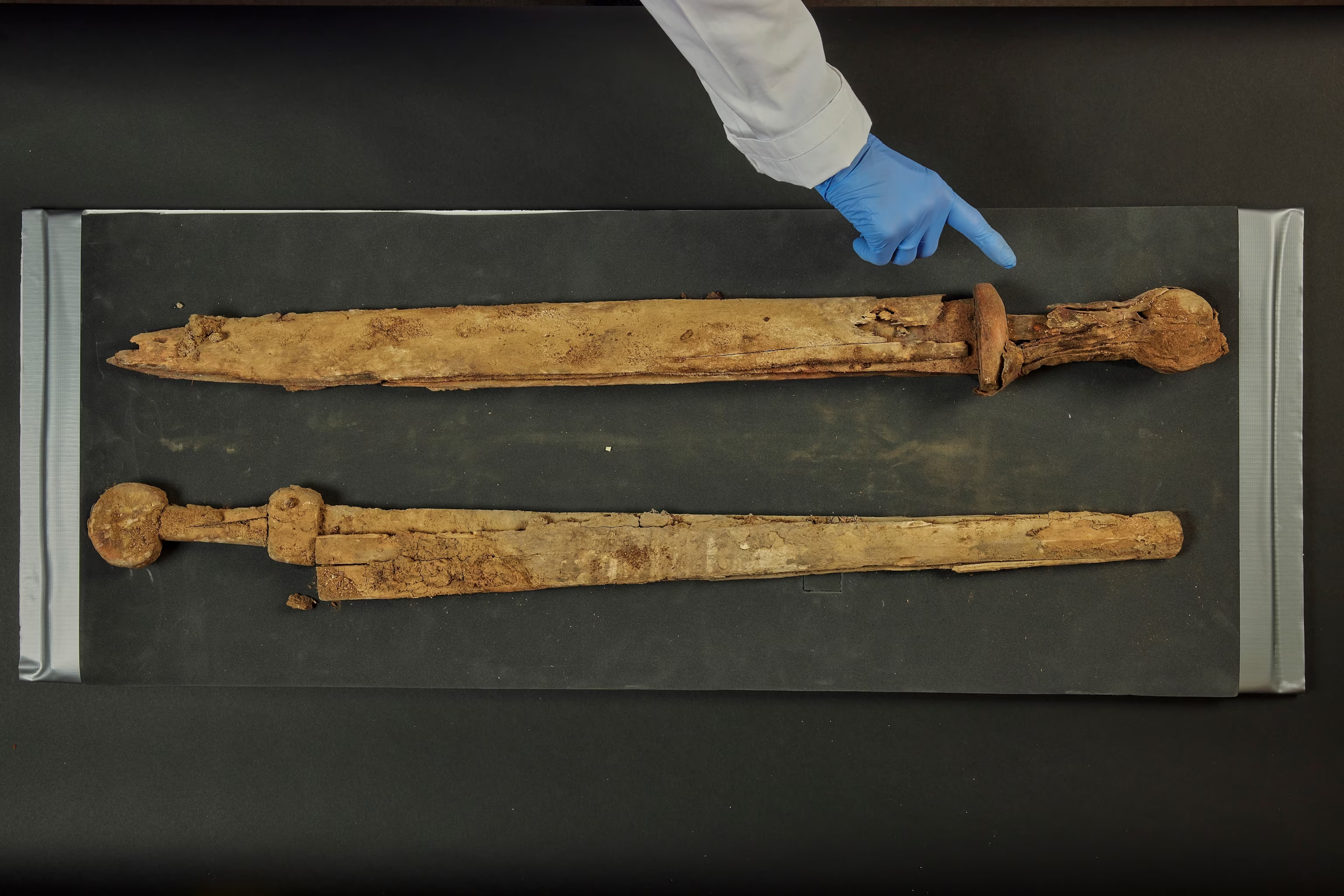
The Roman gladius, a short sword measuring 60-85cm, became legendary for its effectiveness in close combat. Roman legionaries used these weapons to build an empire that spanned three continents.
Medieval Mastery (500-1500 CE)
The medieval period saw swords reach their zenith in both craftsmanship and cultural significance. The longsword, capable of being wielded with one or two hands, became the weapon of choice for knights throughout Europe.
Japanese swordsmiths developed the katana, a curved, single-edged blade that represented the soul of the samurai. The intricate folding technique used to create katanas resulted in blades of exceptional strength and sharpness.
The Renaissance and Rapiers (1500-1700)
As plate armor became more sophisticated, swords evolved from heavy cutting weapons to lighter, more precise thrusting weapons. The rapier emerged as a gentleman's weapon, emphasizing skill and finesse over brute force.
This period also saw the rise of civilian sword-carrying, as swords became status symbols as much as weapons. The elaborate hilts and decoration of Renaissance swords reflected their owner's wealth and taste.
The Age of the Sword Cane (1700-1900)
As firearms made swords less practical in warfare, they transitioned into tools of self-defense and symbols of status. The sword cane emerged during this period, offering a discreet way to carry a blade while maintaining the appearance of a gentleman's walking stick.
Modern Legacy
Today, swords remain culturally significant despite no longer serving as weapons of war. They appear in ceremonies, martial arts, and collecting. The craftsmanship of traditional sword-making continues through artisans who preserve ancient techniques.
From the bronze swords of ancient warriors to the concealed blades of Victorian gentlemen, the sword's history is a testament to human ingenuity and the enduring appeal of well-crafted weapons.